
Loading...


In May 2022, more than 700 policymakers, urbanists, entrepreneurs and housing advocates gathered in Nairobi and online for the first-ever Africa Housing Forum (AHF) — an event hosted by Habitat for Humanity International to reimagine the future of affordable and inclusive housing across the continent. Our team at Restless Stories had the privilege to help bring this ambitious event to life — from designing the 29-page event report, to managing the website, live agenda and social media campaign that reached over 1.4 million people across 111 countries.
The Forum’s agenda revolved around four core themes that captured the breadth of Africa’s housing challenges and opportunities:
These themes set the tone for three days of plenaries, workshops and innovation showcases that brought together diverse voices to shape a shared vision for housing in Africa.
The Africa Housing Forum was a massive team effort that spanned continents. We collaborated closely with colleagues from Habitat for Humanity’s regional offices, creative partners, and housing experts to compile event KPIs, media coverage, and outcomes into one cohesive story.
Our final report – Fostering Inclusivity and Resilience in Housing in Africa – highlighted key achievements:
These numbers told the story of a growing movement determined to make decent, climate-resilient housing accessible to all.
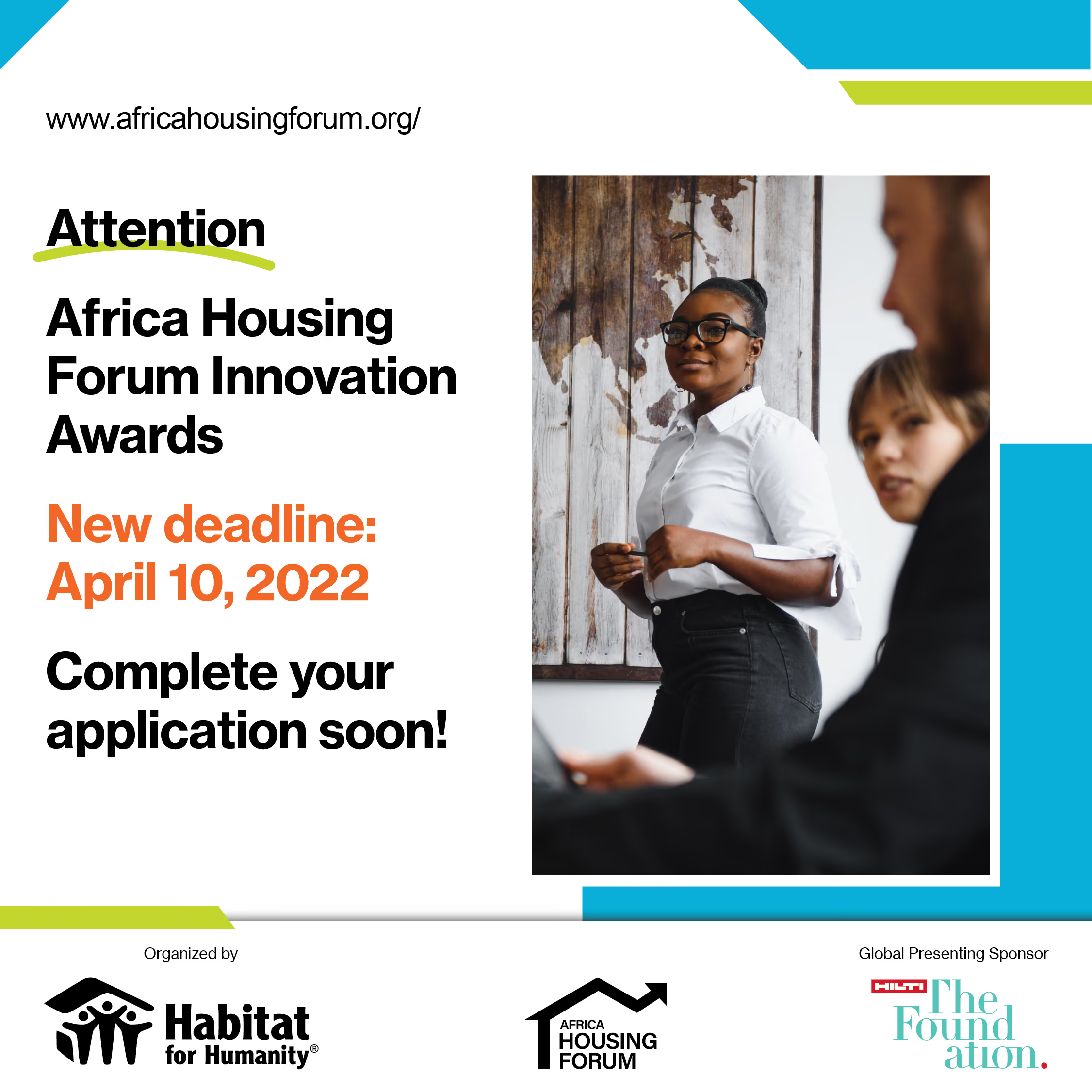
In parallel, we produced five short films featuring the Housing Innovation Award winners — innovators developing low-cost, sustainable housing solutions across Africa. These mini-documentaries helped audiences connect emotionally with the change-makers behind the statistics.
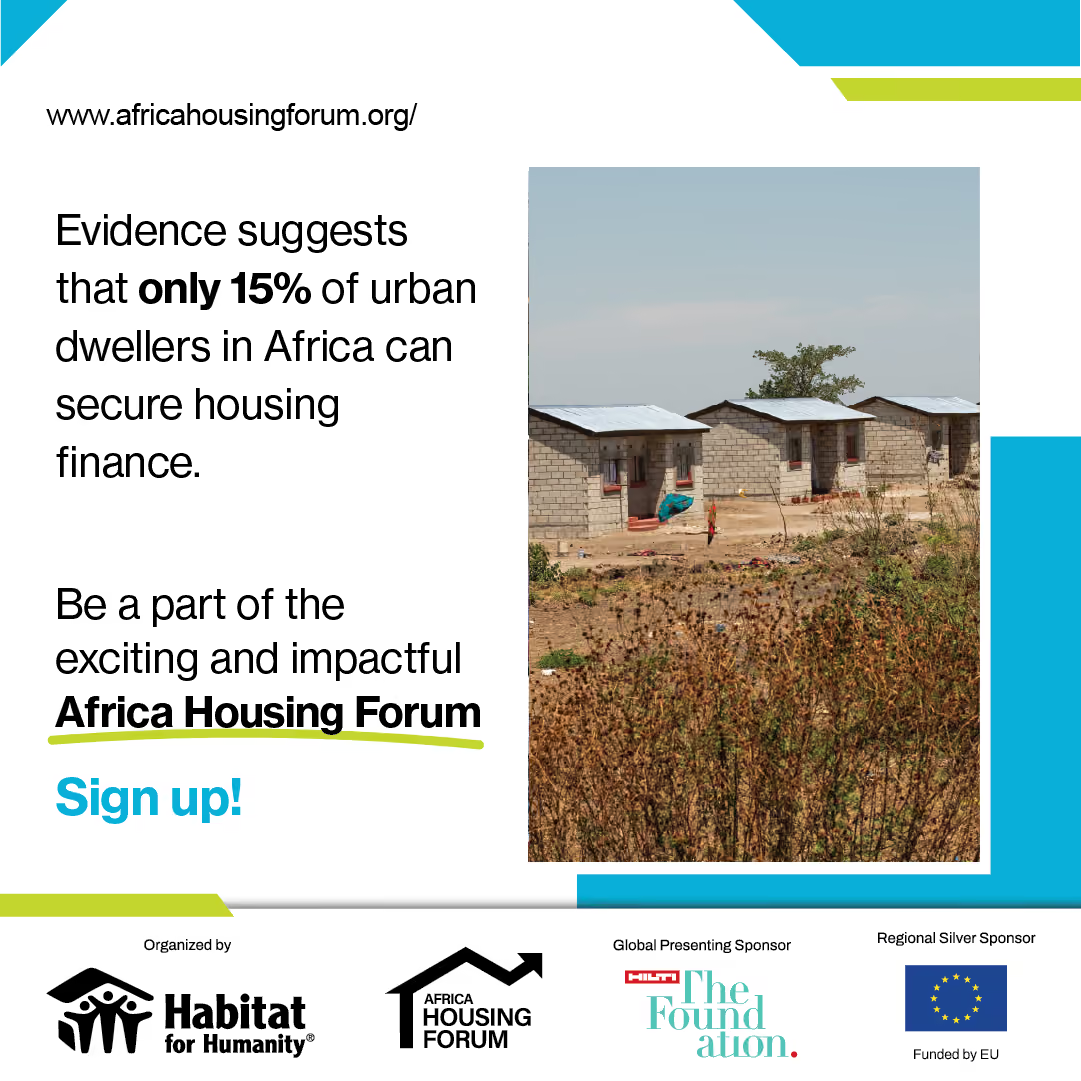
Online, we ran a four-month social media campaign — posting four times a week in both English (and in French for ad campaigns) — using an integrated suite of visual templates (carousels, quote cards, GIFs and explainers) to keep the conversation going before, during and after the event.
The campaign’s success stemmed from a clear digital marketing plan we developed together: defining objectives, audience personas, channel strategies, and KPIs. We complemented organic posts with targeted ad campaigns, creating short 30- and 60-second video ads in multiple formats (9:16 and 16:9) to fit each platform.
Our paid campaigns reached 1.5 million users, drove 5.9k website visits, and achieved 16,000 registration page views across 111 countries.
Because the Africa Housing Forum was a brand-new event and brand-new brand, building visibility from scratch was both a challenge and an opportunity. We knew from the start that we couldn’t rely solely on Habitat for Humanity’s own channels — we needed to tap into partner audiences across sectors to extend the message’s reach and credibility.
We therefore developed a partner asset pack with co-branded visuals, social copy templates, press release snippets and event hashtags, designed to make sharing effortless for collaborators and speakers alike.
Our team coordinated the distribution and scheduling of these assets with dozens of institutional and media partners, helping them tailor posts for their own audiences — from international organisations and housing associations to local NGOs and innovation award finalists.
This approach transformed our partners into active advocates: amplifying content across their own channels, multiplying impressions, and ensuring that conversations about affordable housing reached new audiences beyond Habitat’s immediate ecosystem.
By the time the Forum opened, the AHF identity had already travelled far — gaining legitimacy and recognition across the housing and development community.
The event generated substantial media attention across the continent and beyond:
32 media stories in total:
Coverage spanned Kenya, Uganda, South Africa, Ghana and the wider East Africa region, highlighting how affordable housing can drive economic growth, improve livelihoods, and advance the SDGs.
Beyond the digital metrics, the Forum sparked real-world partnerships and policy dialogues. Habitat for Humanity Kenya began working with Muungano wa Wanavijiji to improve urban settlements. In Lesotho, new partnerships emerged with Rise, a social enterprise improving infrastructure for low-income communities.
And Uganda’s national office used the momentum to host its first National Housing Symposium — now set to become an annual event.
Managing the event’s live agenda — featuring over 20 sessions and 90+ speakers — was a logistical challenge that required agility and coordination. Working closely with multiple teams, we maintained real-time website updates while also designing the printed agenda distributed onsite.
We also wrote five daily blog articles summarising each day’s discussions — blending academic insight with storytelling to make complex housing data accessible and engaging. Each speaker was profiled on a dedicated webpage, complete with photos and bios to ensure visibility for all contributors.
The Africa Housing Forum wasn’t just a convening of experts — it was a living demonstration of how thoughtful communication and storytelling can build movements, not meetings. Behind the impressive attendance and digital reach lay several marketing lessons worth noting:
Africa’s urban population is expected to double by 2050, yet 60% of the continent’s urban dwellers already live in informal settlements without access to water, sanitation, or healthcare. The Africa Housing Forum reminded everyone that housing is a foundation for dignity, safety, and opportunity.
By combining digital storytelling, data-driven reporting, and cross-sector collaboration, the Forum set a new benchmark for housing advocacy events.
And for us, it reaffirmed what we’ve always believed: that good communication doesn’t just describe change — it drives it.
Restless Stories is a digital creative studio
registered in England and Wales
as a limited company 16989146

.webp)
.webp)


